Sustainable Business Practices: Profits and Planet in 2026
Sustainable Business Practices: Profits and Planet in 2026
As 2026 unfolds, businesses face a clear reality: sustainability isn’t just a buzzword—it’s the foundation of lasting success. With mounting climate challenges, consumer pressure, and regulatory changes, organizations of every size find that aligning profitability with environmental stewardship is not only possible, but essential.
The Evolution of Corporate Responsibility
Over the past decade, sustainable business practices have evolved beyond mere corporate social responsibility programs. In 2026, sustainability is integrated into core strategies, influencing everything from product design to supply chains. Major brands now view environmental and social impact as fundamental metrics—equal to revenue and growth.
This shift is driven by both opportunity and necessity:
- Regulatory pressures: Governments worldwide are tightening emissions targets and mandating transparent ESG reporting.
- Consumer demand: Surveys show that over 70% of global consumers prefer to buy from eco-conscious companies.
- Investor priorities: ESG (Environmental, Social, and Governance) funds report record inflows, directing capital to sustainable innovators.
Profitable Sustainability Strategies for 2026
The misconception that sustainability costs more is fading. Instead, businesses are discovering that planet-friendly practices often boost profitability:
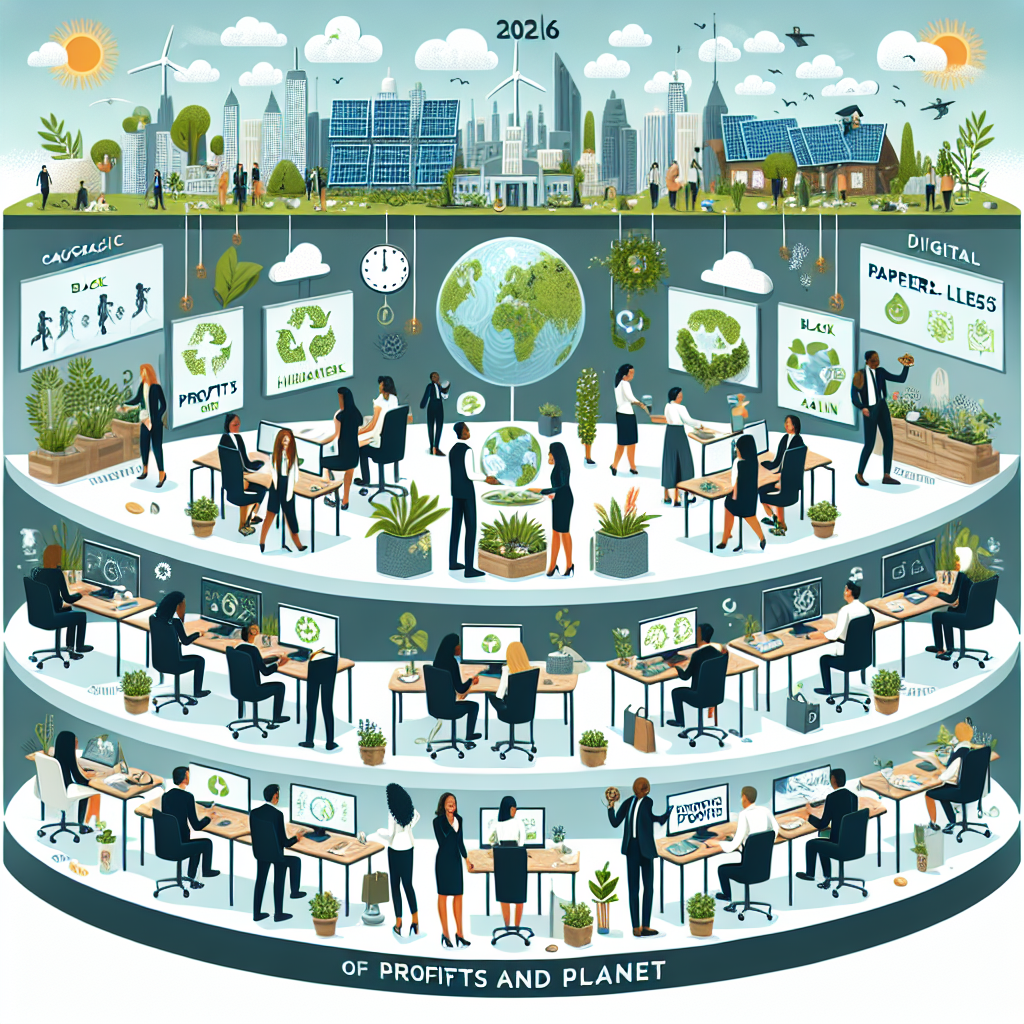
- Resource Efficiency: Companies are cutting energy waste, recycling materials, and shrinking water usage. Not only does this lower bills, but it also builds climate resilience.
- Green Innovation: Startups and established firms alike are launching circular products—from wearables built with recycled plastics to “as-a-service” models that keep goods in use longer. These approaches unlock new revenue streams and customer loyalty.
- Supply Chain Transformation: Digital tools like blockchain and AI enable end-to-end transparency, ensuring ethical sourcing and dramatically reducing forced labor or waste.
- Remote and Hybrid Work: Beyond its COVID-era origins, flexible work cuts emissions from commuting and office operations, while attracting talent from broader, more diverse pools.
- Sustainable Finance: Banks increasingly link loan rates to measurable green outcomes, incentivizing continuous improvement.
For example, multinational electronics firm GreenWave cut its annual operating costs by 23% after switching to renewable energy and redesigning its packaging for reusability. In doing so, it gained new contracts with eco-focused retailers and improved its public reputation.
Challenges on the Road to Sustainability
While progress is accelerating, barriers remain. Many small and medium enterprises (SMEs) cite a lack of expertise or upfront capital as the main hurdles. In response, partnerships with local governments, grant programs, and shared resource initiatives are making sustainability upgrades more accessible.
Additionally, the threat of “greenwashing”—overstated or misleading sustainability claims—is more serious than ever. Regulators are cracking down, and consumers are better equipped to spot inauthentic efforts thanks to third-party verification and data-driven reporting.
The Role of Technology and Innovation
As we look toward the future, technology is helping businesses accelerate their journey:
- AI-powered analytics optimize routes for fleet vehicles, reduce unsold inventory, and predict maintenance needs, all cutting emissions and costs.
- IoT sensors monitor real-time resource usage, enabling dynamic adjustments and instant leak detection.
- Blockchain solutions guarantee transparent supply chains, reassuring customers and regulators.
- Automated reporting tools simplify compliance with ever-evolving sustainability standards, freeing up teams for innovation.
Sustainability as a Competitive Advantage
The data is clear: businesses that embed sustainability at every level outperform those that treat it as an afterthought. They enjoy stronger talent retention, brand loyalty, and investor confidence. In 2026, purpose and profit are not in conflict—but partners for growth.
For organizations just starting, it’s not too late. The key is to set realistic, measurable goals, engage stakeholders, and communicate transparently. Incremental progress—such as reducing single-use plastics, sourcing renewable energy, or educating staff—lays the groundwork for transformative shifts.
The Path Forward
As global challenges escalate, businesses must lead the charge toward a just, sustainable future. By weaving together profit motives and planet-friendly action, companies can unlock lasting value—benefiting shareholders and society alike.
In 2026 and beyond, the most successful businesses will prove that taking care of the planet is simply good business.
* The post is written by AI and may contain inaccuracies.
About Author