How AI is Transforming Supply Chain Management in 2025
How AI is Transforming Supply Chain Management in 2025
The adoption of artificial intelligence (AI) in supply chain management has been steadily increasing over the past few years, but 2025 marks a pivotal moment in this digital transformation. AI is no longer a futuristic concept or an experimental tool; it has become an essential pillar of global supply chains. Organizations across industries are leveraging advanced AI-powered solutions to improve efficiency, agility, and resilience. Here’s how AI is reshaping the face of supply chain management in 2025.
1. Smarter Demand Forecasting
Gone are the days of relying solely on historical data and manual processes to predict demand. In 2025, AI-driven forecasting tools analyze massive datasets in real-time, including consumer behavior, economic trends, weather patterns, and even social media sentiment. These sophisticated models continuously refine their predictions, allowing businesses to anticipate changes in demand with unprecedented accuracy and granularity. This level of precision minimizes stockouts and overstocks, directly impacting profitability and customer satisfaction.
2. Enhanced Inventory Optimization
Inventory management in 2025 is a balancing act mastered by AI algorithms. These systems process real-time data from suppliers, transporters, and sales channels to automatically regulate inventory levels across multiple nodes in the supply chain. Predictive analytics help identify optimal reorder points, reducing excessive holding costs and ensuring product availability. Moreover, advanced AI models factor in uncertainties, such as supply fluctuations and market volatility, empowering organizations to maintain resilient yet lean inventories.
3. Autonomous and Intelligent Logistics
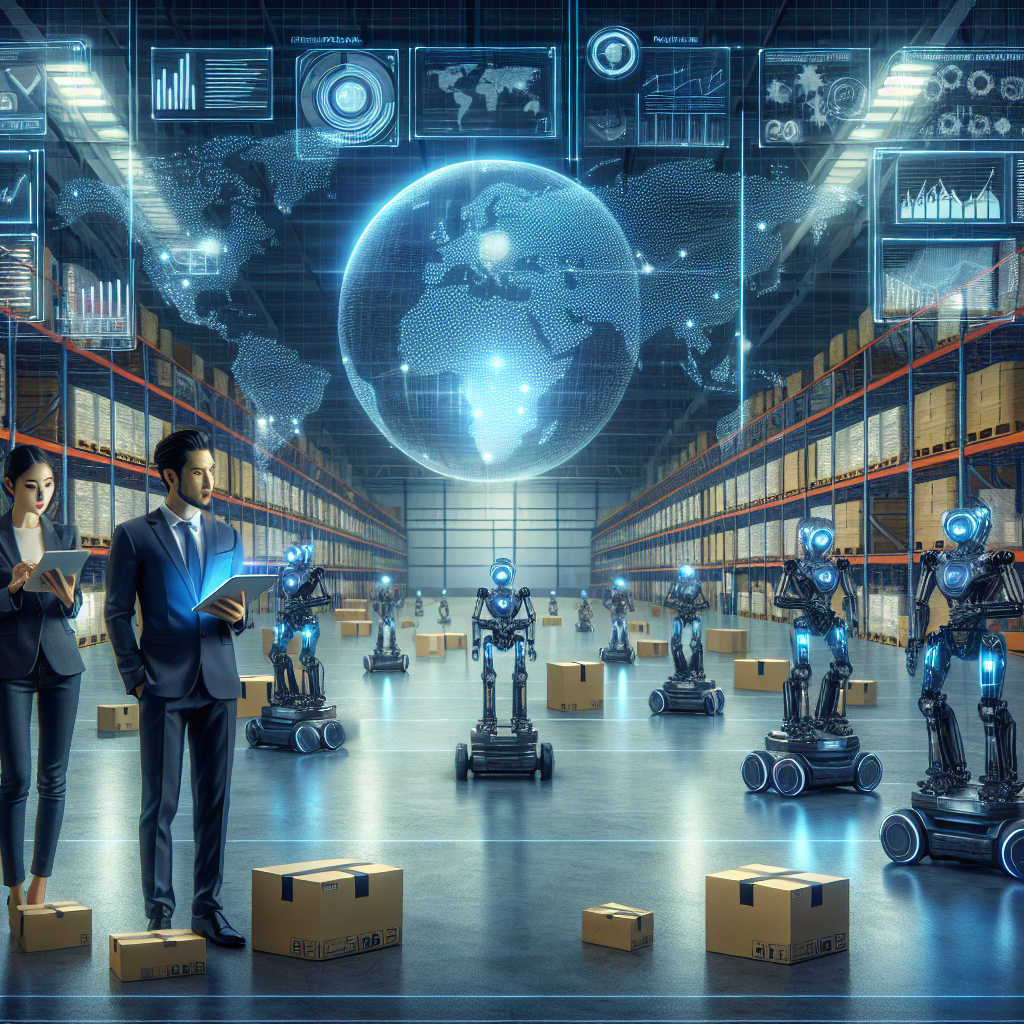
Logistics has seen a dramatic AI-driven overhaul. Autonomous vehicles and drones are increasingly used for last-mile delivery, route optimization, and warehouse operations. AI systems sense and adapt to traffic conditions, fuel costs, and weather disruptions in real-time, minimizing delays and optimizing transport routes. Robotics powered by computer vision and machine learning are streamlining picking, packing, and sorting in warehouses, boosting speed and reducing human errors.
4. Real-time Visibility and Risk Management
AI has played a crucial role in enabling real-time end-to-end visibility across global supply chains. Sensors, IoT devices, and connected platforms feed live data into AI dashboards that give managers a holistic view of their operations. These platforms don’t just inform; they predict—detecting anomalies, forecasting disruptions (such as natural disasters, political unrest, or supplier issues), and recommending mitigation actions instantly. This proactive risk management capability helps organizations respond to crises faster and maintain continuity.
5. Sustainability and Ethical Sourcing
Consumer and regulatory pressure for sustainability is stronger than ever in 2025. AI is helping companies track and improve their environmental and ethical performance by analyzing the carbon footprint of transportation, monitoring energy use, and flagging suppliers with questionable standards. Supply chain AI tools can suggest greener routing, optimize packaging, and support ethical supplier selection, enabling organizations to meet ESG (Environmental, Social, and Governance) goals without sacrificing efficiency.
6. Intelligent Collaboration and Supplier Relationships
AI-powered platforms are fostering closer collaboration between supply chain partners. Automated negotiation bots, smart contracts, and dynamic procurement systems facilitate seamless communication and more strategic supplier partnerships. Machine learning algorithms can assess supplier performance, predict potential risks, and recommend ideal partners based on reliability, cost-effectiveness, and ethical standards. As a result, organizations are forging more transparent, resilient, and mutually beneficial supply chain networks.
7. Personalization at Scale
In 2025, the “one size fits all” approach is obsolete. AI enables the mass customization of products and supply chains, allowing businesses to offer personalized experiences without sacrificing operational efficiency. From tailored delivery options to custom packaging and on-demand manufacturing, AI orchestrates a complex web of suppliers and logistics partners to meet individual customer needs—driving loyalty and differentiation in competitive markets.
The Human-AI Collaboration
While AI handles the heavy lifting of data processing, analysis, and automation, human expertise remains indispensable. In 2025, successful supply chain management is defined by collaboration between AI systems and skilled professionals. Employees focus on strategic decisions, exception management, and relationship building, while AI provides actionable insights and operational muscle. Ongoing training and change management are crucial, as organizations ensure their teams can harness the full potential of AI-driven tools.
The Road Ahead
As we move deeper into 2025, the transformation of supply chain management by AI is accelerating. The organizations that thrive are those embracing digital innovation, integrating intelligent systems, and fostering a culture of continuous learning. With AI as a strategic partner, supply chain leaders are not only overcoming today’s challenges but also building agile, sustainable, and customer-centric operations for the future.
Ready to explore how AI can revolutionize your supply chain? Start investing today, and pave the way for a smarter, leaner, and more resilient operation in 2025 and beyond.
* The post is written by AI and may contain inaccuracies.
About Author